
Safety Guidance for the Gas Cylinder Storage Area in Your Lab
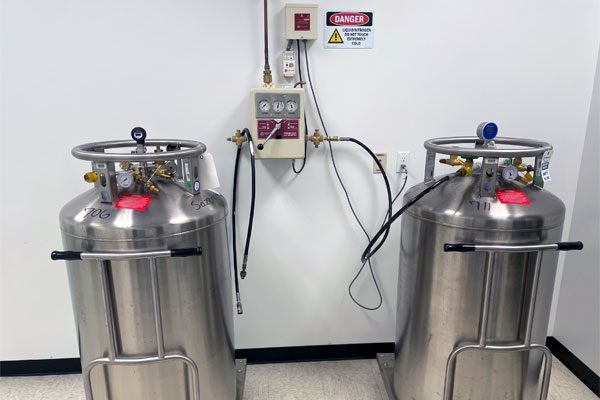 High-pressure gas cylinders, especially those not in use, often blend into the background of a busy medical, research, university, or life sciences workspace. Day-to-day, it’s easy to take for granted the vital role these tanks, and the compressed and cryogenic gases they supply, play in fueling a lab’s equipment and experiments and to lose sight of how dangerous they can be if they’re not being stored properly.
Due in large part to their size and weight and the hazardous chemical composition of the gases they contain, there are a range of risks—from physical injuries to gas leaks and explosions—associated with improperly stored high-pressure gas cylinders.
To minimize the likelihood of an accident, lab and facilities managers should carefully select storage areas and regularly inspect the space and the cylinders placed there. Middlesex Gases has compiled a list of critical questions that may help facilitate this process. However, it’s essential to verify that your facility’s storage space and gas safety procedures comply with OSHA standards as well as National Fire Protection Association (NFPA) and local fire codes.
The Gas Cylinder Safety Checklist: 15 Points to Audit Your Storage Area
- Have you posted permanent and visible signage warning that flammable compressed gases are stored there and indicating appropriate precautions?
- Is each cylinder clearly labeled on its shoulder with the gas type and related hazards, the supplier’s name, and the cylinder’s test or inspection date?
- Are cylinders secured in an upright position to a fixed support—like a wall or bench—by double chains, multi-bay racks, or other OSHA-approved restraint devices to prevent tanks from tipping, falling, or knocking into each other?
- Are empty cylinders clearly marked or tagged and stored in a separate area from full cylinders?
- Are cylinders containing flammable gases (e.g., acetylene) stored at least 20 feet from oxidizers (e.g., oxygen)? Or does a 5-foot-high noncombustible wall separate them?
- Are cylinders containing medical-grade gases separated from those with non-medical-grade gases in order to limit the potential for cross contamination?
- Are cylinders stored away from electrical connections, gas flames, and other sources of ignition?
- Is the storage room dry and well ventilated in order to prevent corrosion and other damage to the cylinders?
- Is the designated storage area temperature controlled and away from direct sunlight, ensuring cylinders won’t be exposed to temperatures above 125°F?
- Are valves closed on all cylinders, whether empty or full, and are valve protection caps securely in place and regulators removed?
- Are cylinders organized so they don’t interfere with exit paths, allowing for easy delivery and removal?
- Are hand trucks and personal protective equipment (PPE) readily available when cylinders need to be moved? (Note: Only trained facilities and lab personnel should be handling gas cylinders.)
- Is the storage area always secured in order to protect equipment from theft and vandalism?
- Is the air in the storage room continuously monitored to ensure proper oxygen levels, and are all employees aware that they should check for air displacement before entering the room and repeatedly while in the space?
- Have gas sensors been installed in the storage area that will set off an alarm in case of a gas leak, and are there emergency evacuation plans and shutdown procedures for this and other similar scenarios?
Whether you’re in the process of drawing up plans for a gas cylinder storage area or overdue for a safety audit of the space you currently have, you may want to contact your gas provider to see if they offer any assistance.
At Middlesex, we provide customers with complimentary gas safety audits. These are comprehensive reviews of all the gases and gas equipment being used and stored in their facilities. Immediately following an audit, we share a written report of our findings along with recommendations for fixing any issues we uncover as quickly and cost-effectively as possible. If services like this interest you, please feel free to reach out to a member of our team for more information about the advantages of working with Middlesex.